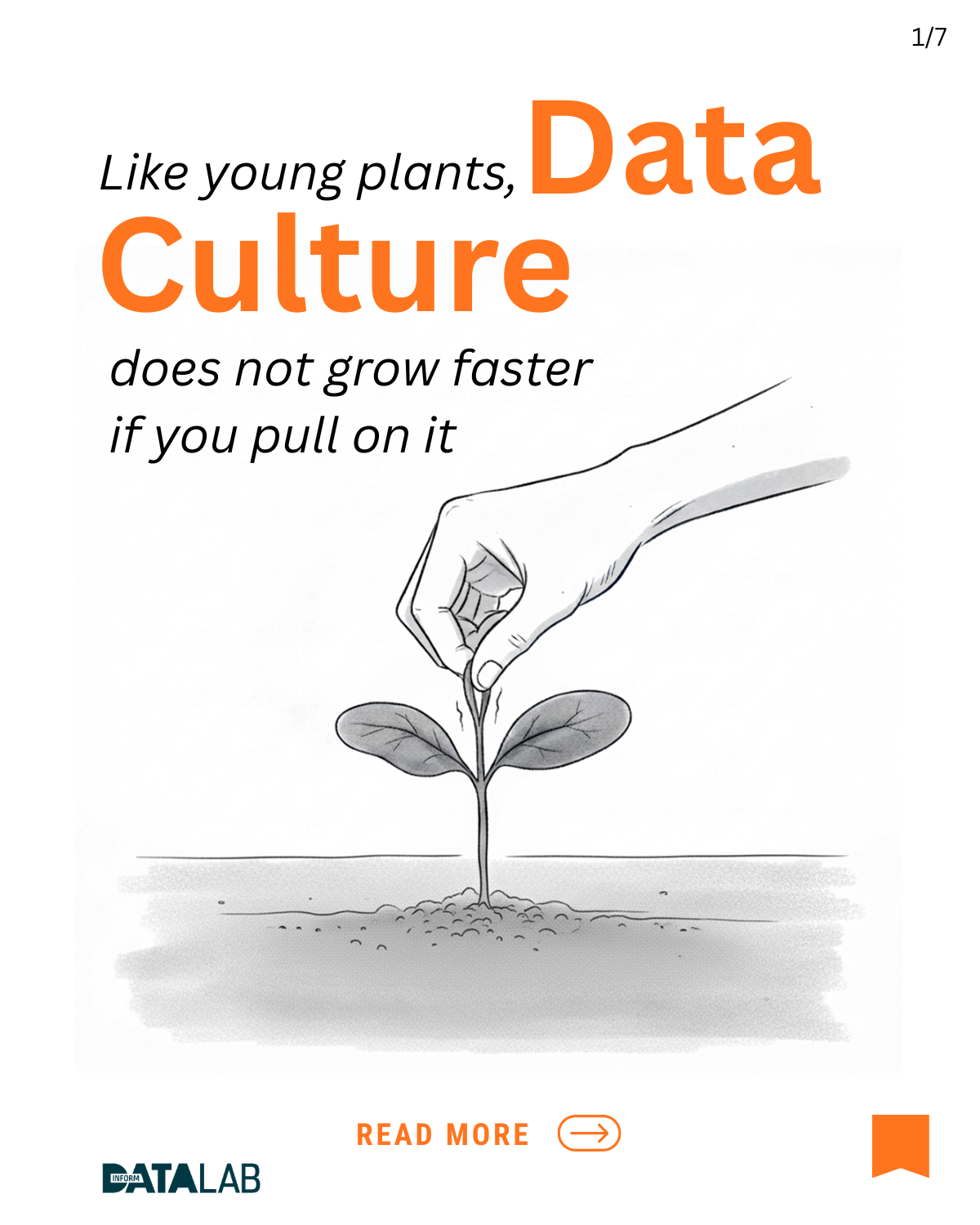
**Data culture is like a young plant — it doesn't grow faster just because you pull on it**
LinkedIn Carousel
**Data culture is like a young plant**
Despite billions invested in data and AI, most initiatives still fall short. Reports collect dust. AI pilots never scale. High investment, low return.
The typical response? "We need a better data culture." It gets treated as the missing ingredient — something to be designed and installed so that organizations finally recognize and act on the value in their data.
This is a fundamental mistake in reasoning. Organizational culture is not the cause of success or failure — it's the effect. It is the result of how an organization makes decisions and solves problems every day, not a prerequisite for doing so.
Attempts to engineer data culture directly — through value statements, training programs, or appeals to mindsets — miss the point entirely. You're just pulling on the plant.
In my new article on CIO.com, co-authored with Dr. Leonie Petry, we explain why this approach is doomed by design — and what to do instead: identify the true contextual barriers blocking value creation with data and AI, and remove them.
I'll share the link to the article in the first comment. 👇
What are you doing to create the right conditions for growth? Or are you still pulling on your "data culture plant"?
#DataCulture #DataStrategy #DataLeaders